A safari in Tanzania is one of the great wildlife journeys on earth. The Serengeti, the Ngorongoro Crater, Tarangire and Lake Manyara are all within reach of Arusha, and each one feels completely different.
But a great safari depends on more than choosing the right parks.
When is the best time to go? How far will you drive each day? Should you choose a private or a group safari? What should your quote include? Do you need a yellow fever certificate? And what are the rules inside the parks?
These are the 10 things we explain to every guest before their first game drive.
For the general practical side of travelling in Tanzania, including money, language, electricity and clothing, see our Tanzania Travel Tips guide. This article focuses on the safari itself.
Tanzania Safari at a Glance
| Safari Information | What to Know |
|---|---|
| Safari hub | Arusha |
| Main safari region | Northern Circuit |
| Key parks | Serengeti, Ngorongoro, Tarangire, Lake Manyara |
| Main dry season | June–October |
| Calving season | Usually January–February, southern Serengeti |
| Mara River crossings | Usually July–October, northern Serengeti |
| Recommended first safari | 5–7 days |
| Typical vehicle | 4×4 with a pop-up roof |
| Visa | Official eVisa portal (visa.immigration.go.tz) |
| Park fees | Charged per person, usually per 24 hours |
| Drones | Not allowed in national parks without special permits |
| Plastic carrier bags | Banned since June 2019 |
1. Wildlife Is Wild, and the Great Migration Moves
A safari is not a zoo.
Animals move with the rain, the grass and the water. What you see depends on where you are and when you travel.
This matters most for the Great Migration. The wildebeest and zebra herds move in a broad loop through the Serengeti ecosystem, and the timing changes from year to year with the rains.
The Great Migration: General Pattern
| Period | Where the Herds Usually Are | What to Expect |
|---|---|---|
| January–March | Southern Serengeti and Ndutu area | Calving season, with many predators nearby |
| April–May | Central and southern plains | Long rains, green landscapes, fewer visitors |
| May–July | Western Corridor | Herds moving north and west; Grumeti River crossings |
| July–October | Northern Serengeti | Mara River crossings when the herds are in the area |
| November–December | Moving south again | Short rains and herds returning south |
These should be treated as general patterns rather than guarantees.
A river crossing may happen on your day, or not at all.
The good news is that resident wildlife is present all year. The Ngorongoro Crater, Tarangire and much of the central Serengeti offer strong game viewing in every season.
Our practical advice
- Choose your dates around what you most want to see.
- Ask your operator to plan camp locations around the latest herd movements, not a fixed calendar.
- Remember that resident wildlife makes every month worthwhile, so don’t plan around the migration alone.
2. How Far You Drive on a Safari in Tanzania
The Northern Circuit is a road journey.
Most safaris start in Arusha and follow a route like this:
Arusha → Tarangire → Ngorongoro → Serengeti → Arusha
Approximate Driving Times
| Route | Approximate Time (without game-viewing stops) |
|---|---|
| Arusha → Tarangire | 2–3 hours |
| Arusha → Ngorongoro Crater rim | 3–4 hours |
| Ngorongoro → central Serengeti | 3–4 hours, much of it unpaved |
| Arusha → central Serengeti | Most of a day |
Roads inside the parks are unpaved and can be bumpy and dusty.
On travel days you are often game viewing along the way, so the time passes well. But it is still a long day in a vehicle.
This is why we rarely recommend a Serengeti safari shorter than three days by road.
If your time is limited, a fly-in safari can replace the long drive back with a short domestic flight.
3. Private Safari or Group Joining Safari?
There are two main ways to travel on safari.
| Private Safari | Group Joining Safari | |
|---|---|---|
| Who is in the vehicle | Only your party | Other travellers on the same itinerary |
| Departure dates | Your choice | Set departure dates |
| Itinerary | Tailored to you | Fixed route |
| Pace and stops | You and your guide decide | Agreed with the group |
| Cost | Higher per person | Lower, because vehicle costs are shared |
A private safari suits families, honeymooners, photographers and anyone who wants control over the pace.
A group joining safari suits solo travellers and budget-conscious guests who are happy with a fixed plan.
We run both with our own vehicles and guides, so you can choose the style that fits your trip.
4. Your Vehicle and Guide Shape the Whole Experience
You will spend most of your waking hours in the safari vehicle.
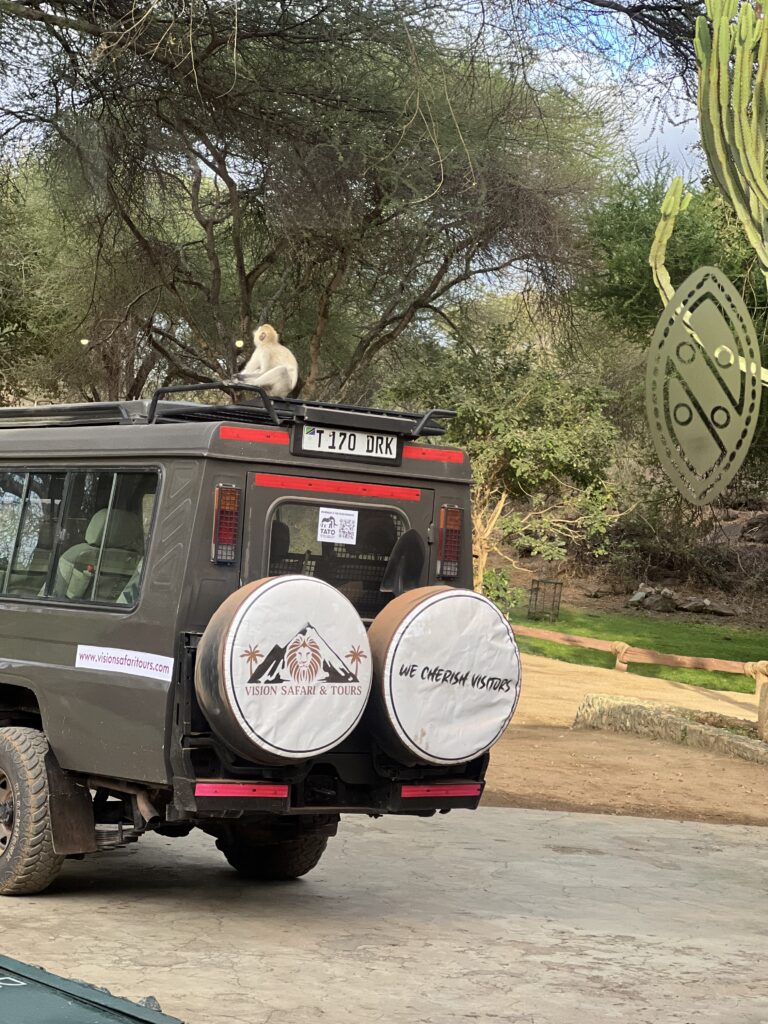
Northern Circuit safaris typically use 4×4 vehicles with a pop-up roof, so you can stand up for wildlife viewing and photography. Our vehicles carry a maximum of seven travellers.
Questions to ask your operator
- How many travellers will share the vehicle?
- Does the vehicle have a pop-up roof?
- Is there charging for phones and cameras?
- Is drinking water provided during game drives?
- Who is the guide, and how experienced are they?
Your guide matters more than any lodge.
A good guide reads tracks, understands animal behaviour, listens for alarm calls, positions the vehicle well and explains what you are seeing.
Ask who your guide will be and how long they have been guiding.
Our practical advice
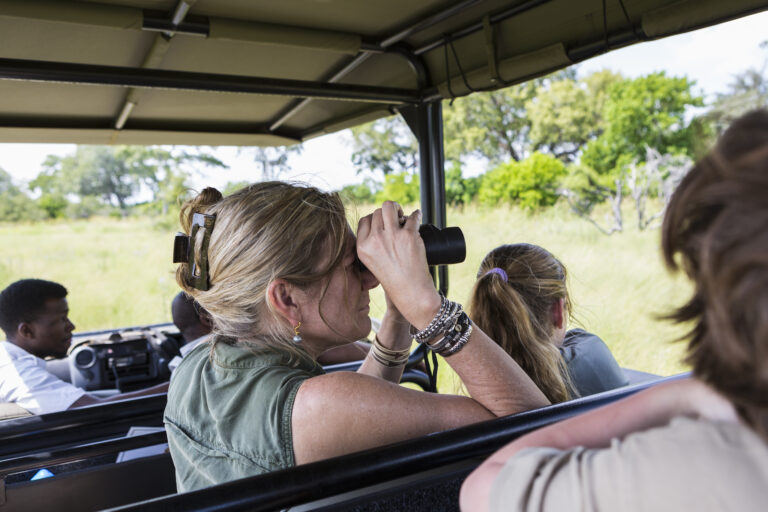
Bring your own binoculars if you can. Sharing one pair in a vehicle slows everyone down.
5. Park Fees Are a Large Part of What You Pay
Many first-time visitors are surprised by how much of a safari price goes to park fees.
In Tanzania, parks charge conservation fees per person, usually per 24-hour period. The Ngorongoro Conservation Area also charges a separate crater service fee per vehicle for the descent to the crater floor.
VAT applies to many of these fees. The rates are set by the park authorities and can change.
What this means for you
- Check that park fees are included in your quote. A reputable quote lists them clearly.
- Be careful with prices that look much lower than others. Park fees are the same for every operator, so a very low quote often means savings somewhere else: the vehicle, the guide, the accommodation or the number of people in the vehicle.
- Good route planning matters. Because fees run in 24-hour periods, a well-planned itinerary avoids paying for time you don’t use.
Ask for an itemised quote so you can see exactly where your money goes.
6. Safari Days Start Early
Safari life follows the rhythm of the animals, not the clock.
A Typical Safari Day
| Time of Day | What Usually Happens |
|---|---|
| Early morning | Breakfast and departure around sunrise, when many animals are active and the light is soft |
| Late morning to midday | Continued game viewing, then a packed lunch at a picnic site or a return to camp |
| Afternoon | A second game drive as the heat eases |
| Before dark | Back at your lodge or camp; game drives in the national parks are a daytime activity |
Toilet stops are at picnic sites, gates and lodges. Between them, your guide can arrange a discreet bush stop at a safe spot. Just ask.
The Ngorongoro Crater has its own rules
Vehicles can usually begin the descent from 6:00 am and must be out of the crater by 6:00 pm. Time on the crater floor is widely applied as a maximum of about six hours per descent.
Starting early gives you the best light and fewer vehicles.
The crater rim is high and cold, especially in the early morning and evening.
Our practical advice
Keep a warm layer with you in the vehicle, even if the afternoon forecast looks hot.
7. Sort Out Your Visa and Health Documents Before You Fly
Paperwork is the part of a safari that cannot be fixed once you land.
Visa
Most visitors need a visa for Tanzania.
The official electronic visa system is run by the Tanzania Immigration Department at visa.immigration.go.tz. The visa covers both mainland Tanzania and Zanzibar.
Fees and rules depend on your nationality. Apply only through the official portal, because third-party websites can charge much more than the government fee.
Yellow fever
Tanzania requires proof of yellow fever vaccination if you arrive from a country with yellow fever risk, and in some cases after transit through one.
This matters for multi-country trips. Neighbouring Kenya and Uganda are both on the risk list.
Check the current rule against your exact route before booking, using official sources such as a Tanzanian embassy or your government’s travel health service.
Malaria and travel health
Malaria is present in many parts of Tanzania.
See a doctor or travel clinic several weeks before departure for advice on vaccinations and malaria prevention for your itinerary.
Before you fly, check:
- Passport validity for the whole trip
- Visa, applied for through the official portal
- Yellow fever requirement for your full route
- Health consultation and any prescribed medication
- Travel insurance that covers medical treatment and emergency evacuation
8. Pack Light, and Leave the Plastic Bags at Home
Tanzania banned plastic carrier bags in June 2019, and the ban applies to visitors too.
Do not pack items in plastic carrier bags, and remove any shopping bags from your hand luggage before landing.
When the ban was introduced, the government said clear zip bags used for toiletries would be allowed. Reusable pouches or dry bags avoid any question.
Safari luggage tips
- A soft-sided bag is easier to load into a safari vehicle and is often required on light aircraft, which have strict weight limits.
- Neutral-coloured, layered clothing works best: cold mornings on the crater rim, hot afternoons in Tarangire.
- A buff or scarf and a dust cover for your camera help on dry-season roads.
Keep your packing light and practical.
If your safari ends with a beach stay, you can often leave extra luggage in Arusha. Ask us about this when planning a safari and Zanzibar trip.
9. Know the Park Rules Before You Arrive
Park rules protect the wildlife and keep you safe.
On safari, you should:
- Stay inside the vehicle unless your guide says it is safe to get out at a designated area.
- Never feed animals or try to attract their attention.
- Keep noise low around wildlife.
- Never ask your driver to leave the road where off-road driving is not permitted.
- Never pressure your guide to get too close to animals for a photograph.
- Take all litter with you.
No drones
Flying a drone in Tanzania’s national parks is not allowed without permits from several government authorities. These permits are designed for professional filming, not holiday use.
If something seems unsafe or against the rules, a good guide will say no.
Please respect that decision.
Responsible travel helps protect the wildlife and landscapes that make Tanzania special.
10. How to Choose the Right Operator for Your Safari in Tanzania
The operator you choose decides your vehicle, your guide, your route and how well problems are handled when plans change.
Before you pay a deposit, check:
| What to Check | Why It Matters |
|---|---|
| Licensing | The company should be licensed in Tanzania and a member of TATO (Tanzania Association of Tour Operators) |
| What is included | Park fees, accommodation, meals, water, transfers and guide fees should be clearly listed, with exclusions stated |
| Who operates the trip | Does the company use its own vehicles and guides, or resell another operator’s trip? |
| Reviews | Read recent reviews on independent platforms, not only testimonials on the company website |
| Payment terms | Deposit, balance due date and cancellation terms should be in writing before you pay |
| Communication | Clear, honest answers, including about what cannot be guaranteed |
Ask any operator, including us, to explain each of these points before you book.
Quick Safari Checklist
Before you book and before you fly, make sure you have considered:
☐ Travel dates chosen around the wildlife you most want to see ☐ Private or group joining safari decided ☐ Quote checked: park fees, vehicle, guide and accommodation included ☐ Visa applied for through the official portal ☐ Yellow fever requirement checked against your full route ☐ Doctor or travel clinic visited for vaccinations and malaria advice ☐ Travel insurance with emergency evacuation cover ☐ Soft-sided bag packed, with no plastic carrier bags ☐ Binoculars and a warm layer for early mornings ☐ Dust protection for your camera
Frequently Asked Questions
How many days do I need for a safari in Tanzania? For a first Northern Circuit safari, five to seven days lets you visit Tarangire, the Ngorongoro Crater and the Serengeti without rushing. Two to four days works well for Tarangire, Lake Manyara and Ngorongoro, but the Serengeti needs more time by road.
What is the best month for a safari in Tanzania? There is no single best month. June to October is the main dry season and is popular for general game viewing. January and February are calving season in the southern Serengeti. The right month depends on what you most want to see.
Are park fees included in the safari price? They should be. Ask for a written quote that lists park fees, the crater service fee (if you visit the Ngorongoro Crater), accommodation, meals, vehicle and guide as included, with any exclusions stated.
Is a safari in Tanzania safe? Guided safaris with a licensed operator are generally safe when you follow your guide’s instructions and the park rules. Good planning, health preparation and travel insurance manage most of the remaining risks.
Can I fly a drone on safari? Not as a tourist. Drones are not allowed in Tanzania’s national parks without permits from several government authorities, which are intended for professional filming.
Can children go on safari in Tanzania? Yes. Families often prefer a private safari, because it allows shorter drives, flexible timings and more breaks.
Safari in Tanzania: Plan Well, Then Let the Wild Surprise You
The best safaris are not the ones that try to see everything.
They are the ones built around the right season, the right pace and the right guide.
You might watch elephants beneath the baobabs of Tarangire one afternoon, descend into the Ngorongoro Crater at sunrise the next, and spend the following days following lions across the Serengeti plains.
No two days are the same. That is what makes a safari in Tanzania so special.
At Vision Safari & Tours, we design Northern Circuit safaris around the experiences our guests want to have, not simply a list of parks to visit.
Whether you are planning your first safari, a family trip, a honeymoon or a safari and Zanzibar combination, we can help you create a journey that fits your time, interests and budget.