Mountain gorilla trekking is available in exactly three places on Earth: Uganda’s Bwindi Impenetrable Forest, Rwanda’s Volcanoes National Park, and the Democratic Republic of Congo’s Virunga National Park (currently not recommended due to regional instability). For most travellers, the real decision is between Uganda and Rwanda — and the honest answer is that both deliver a genuinely life-changing encounter, but the surrounding experience differs enough to matter for your planning.
Permit cost. This is usually the deciding factor for budget-conscious travellers. Rwanda’s gorilla permits are priced significantly higher than Uganda’s — Rwanda has deliberately positioned itself as a premium, lower-volume destination, while Uganda keeps permits more accessible to draw a wider range of travellers. If cost is your primary constraint, Uganda is the more affordable route to the same core experience.
Access and travel time. Rwanda wins clearly here. Volcanoes National Park is roughly a 2-3 hour drive from Kigali International Airport, making it realistic to arrive, trek, and depart within a very compact trip. Bwindi, by contrast, is a long drive (around 8-9 hours) or a short domestic flight from Entebbe — doable, but it adds a logistics day (or a flight cost) that Rwanda simply doesn’t require.
The trek itself. Bwindi’s name is not an exaggeration — “Impenetrable” refers to genuinely dense, tangled forest, and treks there can be steep, muddy and physically demanding, sometimes lasting several hours each way depending on where the gorilla family has moved. Rwanda’s Volcanoes National Park sits in more open, higher-altitude bamboo and volcanic terrain, and treks are, on average, somewhat shorter — though “shorter” here is relative, and both countries can involve a serious hike depending on the day. Neither should be treated as easy; both require a reasonable baseline fitness level, and porters are available (and worth hiring) in both countries.
Gorilla families and habituation. Both countries offer excellent, well-managed viewing of habituated families, with strict rules (a maximum of 8 visitors per group, one hour with the gorillas, minimum distance requirements) enforced identically in both. Uganda has more habituated families spread across a larger park, which can mean slightly more permit availability during peak months. Rwanda’s Volcanoes National Park is smaller but no less impressive, and its dramatic volcanic scenery is a real draw in its own right.
What else is nearby. This is where the two countries diverge most for itinerary planning. Uganda pairs naturally with chimpanzee trekking in Kibale Forest, big-game viewing in Queen Elizabeth National Park, and river/wildlife experiences along the Nile at Murchison Falls — Uganda genuinely offers a fuller “East African safari” alongside the primates. Rwanda pairs beautifully with Lake Kivu (a relaxed, scenic finish after your trek), golden monkey trekking in the same park, and Kigali itself, a clean, well-run capital with a moving, important genocide memorial worth visiting. Rwanda’s trip tends to feel more compact and curated; Uganda’s tends to feel broader and more varied.
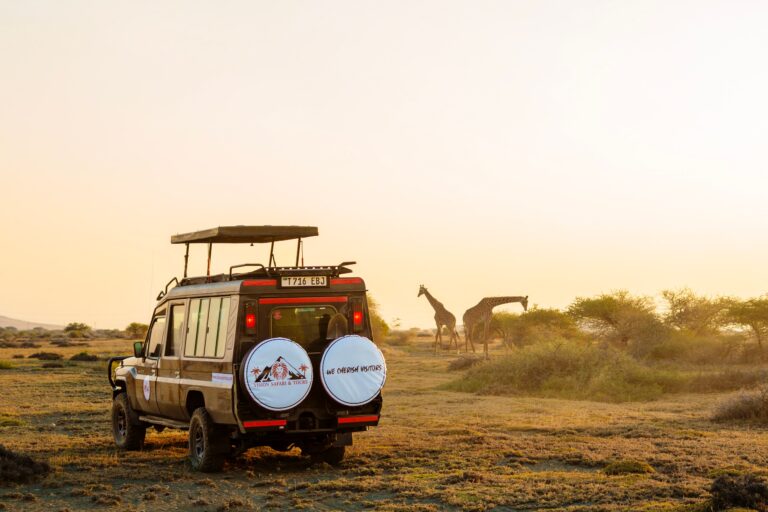
Combining both — or with Tanzania. Because gorilla trekking is such a singular, once-per-trip kind of activity, many travellers choose to combine it with a savanna safari elsewhere in the region rather than choosing Uganda or Rwanda in isolation. Both countries connect well by regional flight to Tanzania’s Serengeti and Ngorongoro Crater, letting you experience open-plains wildlife and montane gorilla trekking in a single, well-paced trip — see our Savanna & Gorillas and Serengeti & Volcanoes Gorilla Safari itineraries for two ways we build that combination.
The honest bottom line: if permit cost is your main constraint, choose Uganda. If minimising travel time and having a highly compact, premium trip matters more, choose Rwanda. If you can only pick one criterion to decide by, that’s genuinely the one that matters most — the gorilla encounter itself is extraordinary in both countries, and travellers rarely come away wishing they’d chosen differently.